
Domestic LVDT Signal Conditioning Circuit - HJG598
Release time:
2021-09-30
With the increasing uncertainty in the international environment and the continuous escalation of Sino-U.S. frictions, the suppression of China's integrated circuit industry by the U.S. and others is gradually expanding. It is becoming increasingly difficult to procure imported integrated circuits, with prices soaring hundreds or thousands of times, severely impacting China's economic development and national security. The trend towards domestic production in the integrated circuit industry is inevitable. In light of the country's increased policy support for the integrated circuit industry, which aims to gradually achieve domestic substitution of the integrated circuit supply chain, our company has launched a self-produced LVDT signal conditioning circuit, HJG598, based on over 200 types of domestically produced integrated circuits after preliminary market research, program validation, experimental verification, and our own technological accumulation and research. This product can functionally replace the imported AD598. Overview HJG598 is an LVDT signal conditioning circuit designed using thick film integration technology. It includes a positive sine wave oscillator and power driver to generate an excitation signal for driving the primary side of the LVDT. At the same time, HJG598 conditions and converts the amplitude-modulated (AM) signal output from a rotary transformer into a DC voltage, providing adjustable sum output (A+B) and difference output (A-B). Unlike AD598, it does not perform ratio division internally on-chip, making it easier for customers to directly determine whether the electrical connection between excitation and rotation is normal based on sum output (A+B). Users can implement division calculations on DSPs or microcontrollers with arithmetic functions to quantify angles. The HJG598 LVDT signal conditioning circuit is very suitable for precision industrial position and measurement applications due to its low temperature drift, high detection accuracy, high reliability, and high sensitivity. It is widely used in angle position detection systems in fields such as servo control systems, aerospace, electronics, etc. In summary, HJG598 truly realizes domestic substitution for AD598. Electrical Schematic Package Form and Pin Functionality 1. Package Form It uses ceramic dual in-line package HD14-02B and HD14-02C ceramic surface mount leadless packages; dimensions are shown in Figure 2: 2. Pin Functionality Table 2 shows pin functionality for packaging. Electrical Characteristics Unless otherwise specified: VCC=+15V,VEE=-15V,T_A=25℃. Typical Application Diagram Note: 1. Changing RSCL can alter EXC's amplitude; 2. Capacitors CT1 and CT2 must be paired and should use NPO/COG dielectric capacitors; 3. The REF pin can adjust the zero point of output voltage VA-B.
Development Background
With the increasing uncertainty in the international environment and the escalating friction between China and the United States, the suppression of China's integrated circuit industry by the U.S. and others is gradually expanding. It has become increasingly difficult to procure imported integrated circuits, with prices soaring hundreds or thousands of times, severely impacting China's economic development and national security. The trend towards domestic production in the integrated circuit industry is inevitable. In light of the country's increased policy support for the integrated circuit industry, which aims to gradually achieve domestic substitution of the integrated circuit supply chain, our company has launched a self-produced LVDT signal conditioning circuit from Hangjing Microelectronics based on over 200 types of domestically produced integrated circuits. After preliminary market research, program validation, experimental verification, and our own technological accumulation and research, we have developed this product as a functional replacement for the imported AD598.
Overview
HJG598 is an LVDT signal conditioning circuit designed using thick film integration technology. It includes a positive sine wave oscillator and power driver to generate an excitation signal that drives the primary side of the LVDT. At the same time, HJG598 conditions and converts the amplitude-modulated (AM) signal output from a rotary transformer into a DC voltage, providing adjustable sum output (A+B) and difference output (A-B). Unlike AD598, it does not perform ratio division internally within the chip, making it easier for customers to directly determine whether the electrical connection between excitation and rotary transformer is normal based on sum output (A+B). Users can perform division calculations on DSPs or microcontrollers with arithmetic functions to quantify angles. The HJG598 LVDT signal conditioning circuit is very suitable for precision industrial position and measurement applications due to its low temperature drift, high detection accuracy, high reliability, and high sensitivity. It is widely used in angle position detection systems in fields such as servo control systems, aerospace, electronics, etc. In summary, HJG598 truly realizes domestic substitution for AD598.
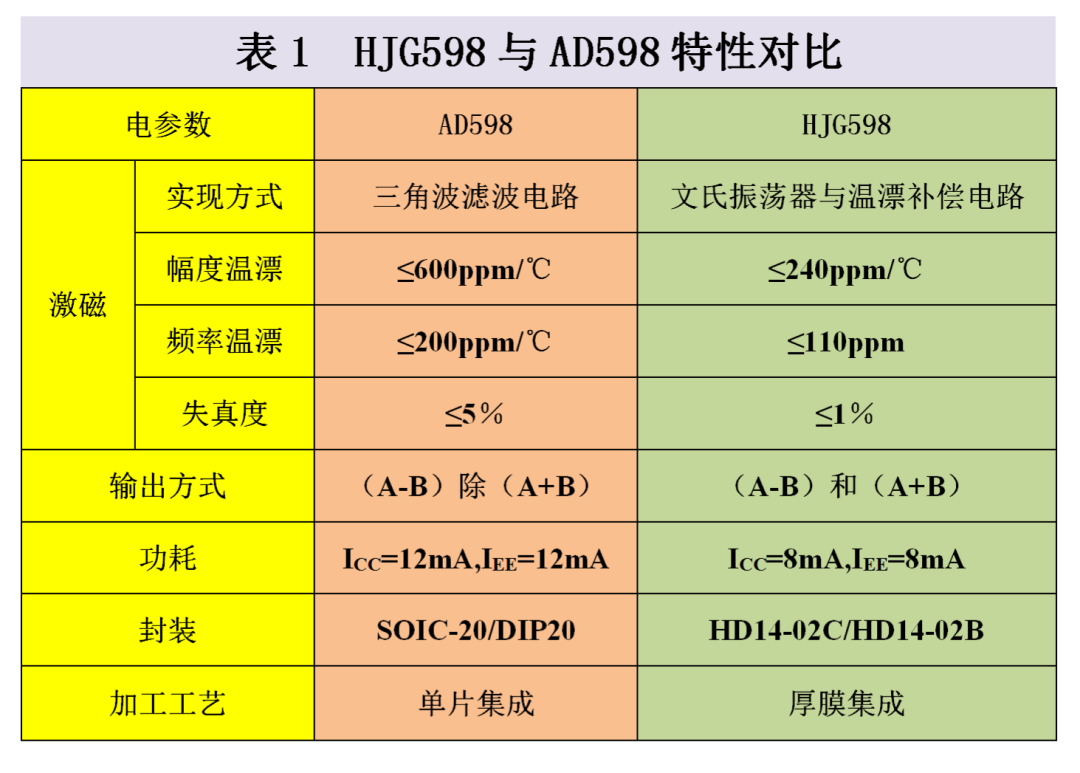
Electrical Schematic
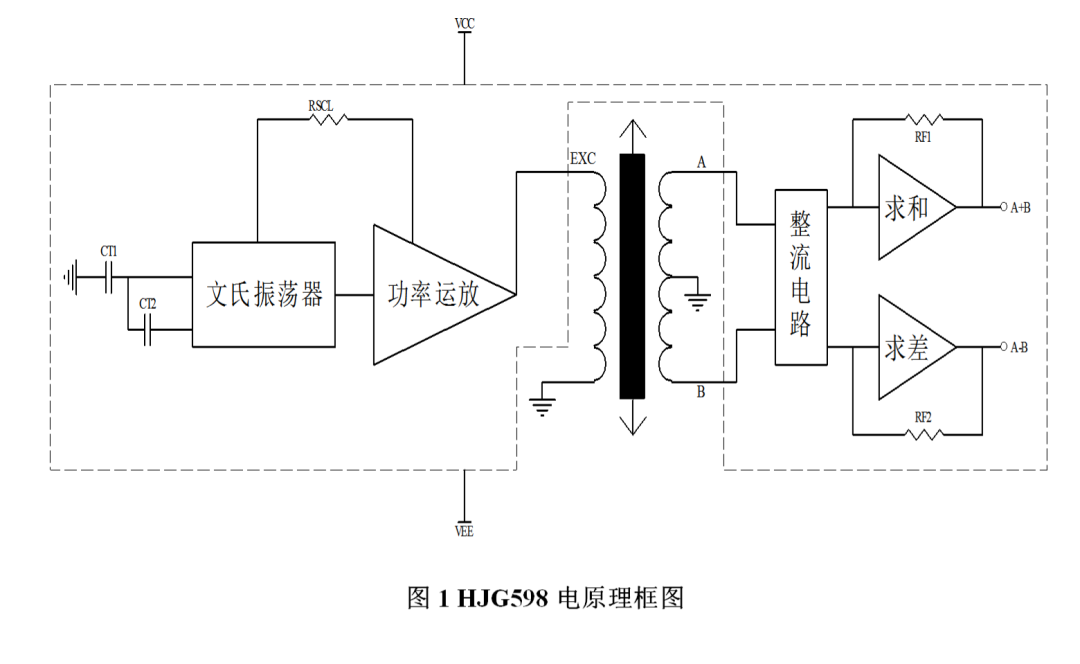
Package Form and Pin Functionality
1. Package Form
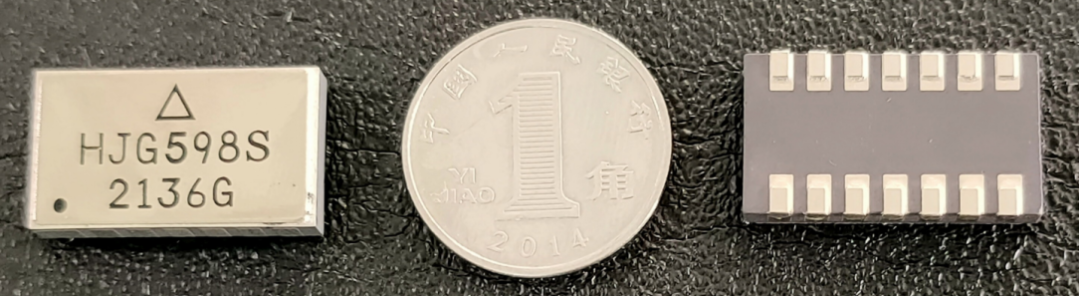
It uses ceramic dual in-line packages HD14-02B and HD14-02C ceramic surface mount packages without leads; dimensions are shown in Figure 2 below:

2. Pin Functionality
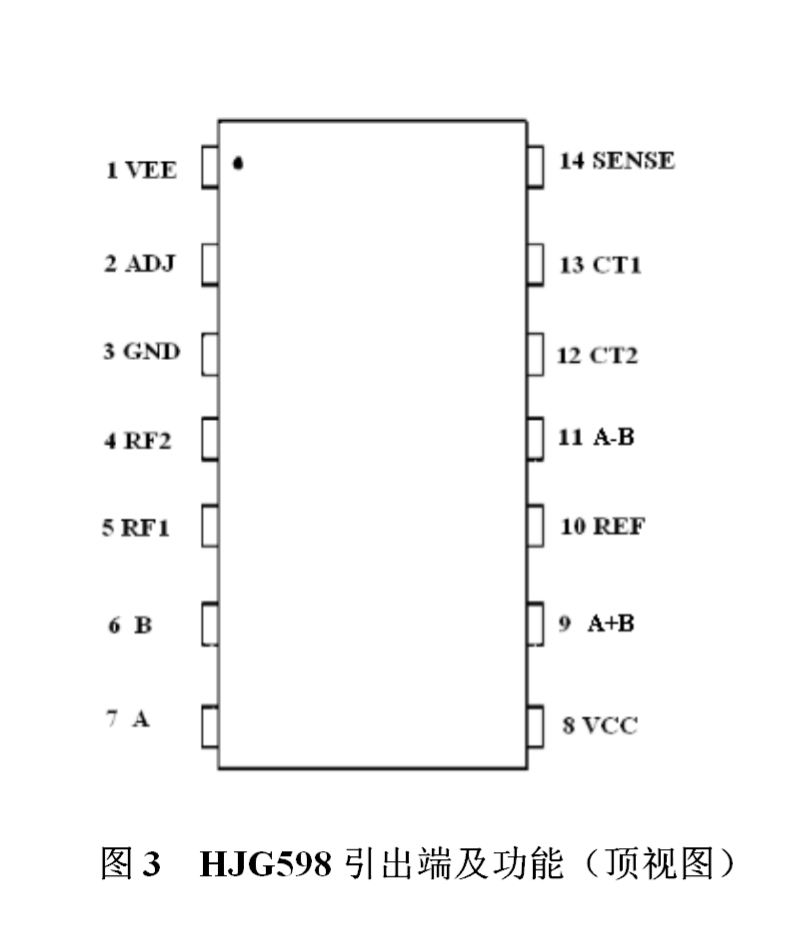
Table 2: Package Pin Functionality Table
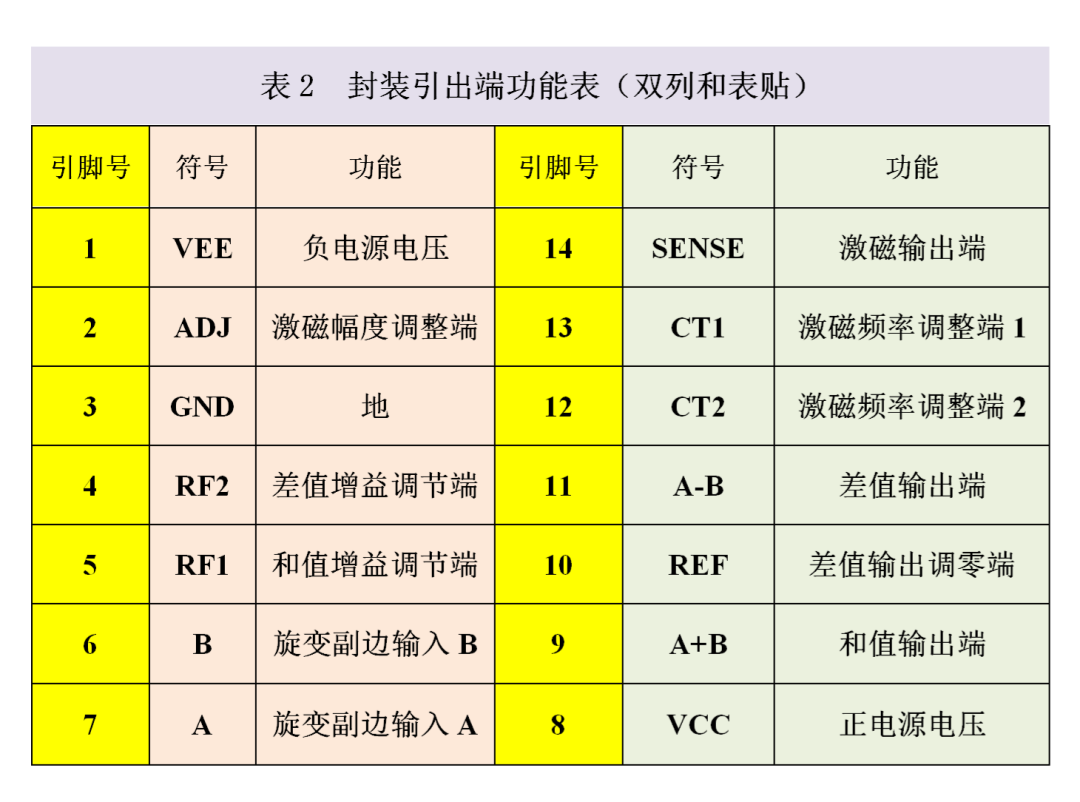
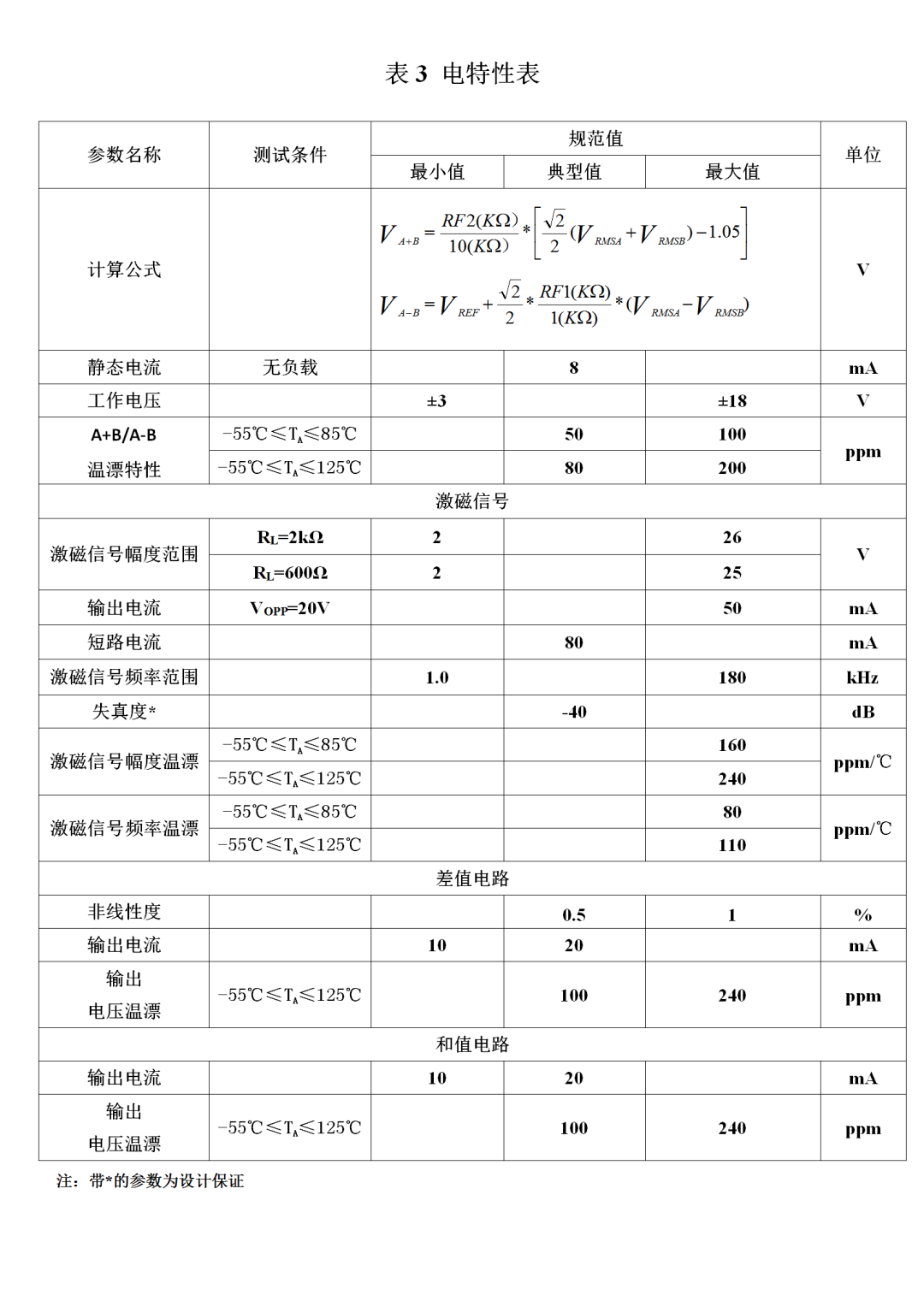
Electrical Characteristics
Unless otherwise specified: VCC=+15V; VEE= -15V; T=25℃.=25℃。
典型应用图

注:
1.改变RSCL可以改变EXC的幅度;
2.电容CT1与CT2必须配对,且必须选用NPO/COG介质的电容;
A-B的零位进行调节。
Key words:
Previous Page
Previous Page:
recommend News
Understanding High-Speed Amplifiers for Efficient Data Acquisition
High-speed amplifiers are essential in the field of data acquisition, particularly for applications that require rapid signal processing and high accuracy. These amplifiers are designed to boost weak electrical signals, making them more suitable for analysis and further processing. Key applications of high-speed amplifiers include scientific research, industrial automation, telecommunications, and
2026-07-02
Wideband Amplifiers: Bridging the Gap in Communication Technology
Wideband Amplifiers: Bridging the Gap in Communication Technology Table of Contents 1. Introduction to Wideband Amplifiers 2. What Are Wideband Amplifiers? 3. The Importance of Wideband Amplifiers in Communication Technology 4. How Do Wideband Amplifiers Work? 5. Applications of Wideband Amplifiers 6. Key Benefits of Using Wideband Amplifiers 7. The Future of Wideband Amplifiers in
2026-07-01
Essential Insights on Power Amplifiers for Motor Control Applications
Power amplifiers for motor control are vital components in various electronic systems, serving as the bridge between low-level control signals and the high-power requirements of motors. These amplifiers are designed to deliver significant power gains, enabling precise control over motor speed, torque, and direction. Understanding their functionality and selection criteria can greatly enhance the p
2026-06-30
Common Mistakes to Avoid When Using Rail-to-Rail Amplifiers
Common Mistakes to Avoid When Using Rail-to-Rail Amplifiers Rail-to-rail amplifiers are powerful tools in the electronics industry, enabling designers to maximize the output signal range of their circuits. While these amplifiers can significantly enhance performance, many users make common mistakes that can lead to suboptimal results. In this article, we will delve into these pitfalls, providing v
2026-06-29
Unlocking the Potential of Rail-to-Rail Amplifiers in Sensor Interfaces
Rail-to-rail amplifiers are pivotal components in modern electronic systems, particularly in sensor interfaces where precision and efficiency are paramount. These amplifiers are designed to operate over the full voltage range from the negative rail to the positive rail, enabling them to effectively utilize the entire supply voltage. This characteristic is especially beneficial in applications requ
2026-06-28